Understanding How RFID Works Without Power: A Simple Guide

Understanding How RFID Works Without Power

One of the most interesting things about RFID technology is how it can work without power. When you use your credit card to pay for something, you simply hold it against a reader and it “just works”.

But there’s no battery in your credit card and you’re certainly not powering it with any kind of electricity, so how does it work? How does the microchip in your card power on, and how does it transfer data to the reader?

How Do RFID Tags Get Power?

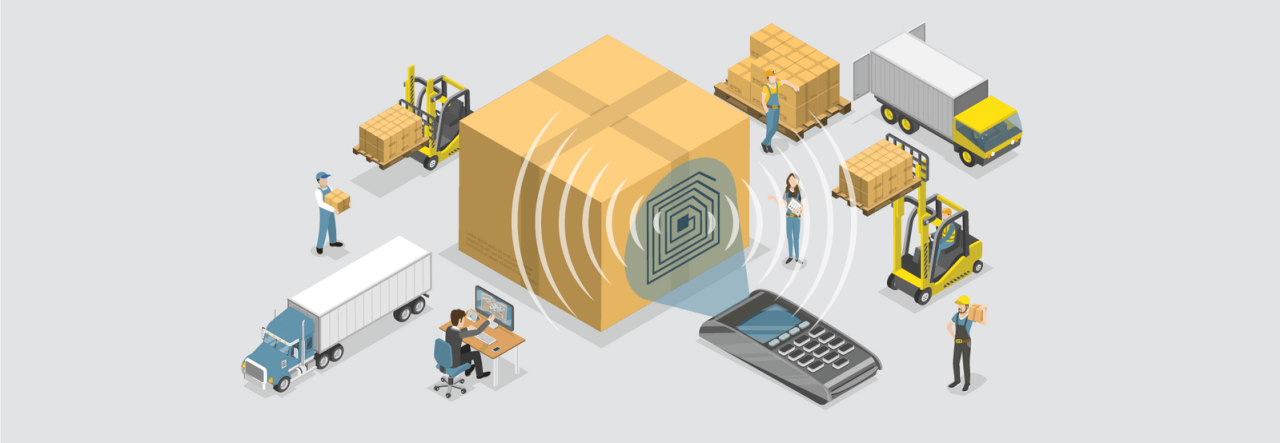
RFID uses something known as electromagnetic induction. When an RFID reader is turned on, it emits radio waves that create an electromagnetic field around it. When an RFID tag comes in contact with this field, its antenna picks up on the radio waves, creating a small electrical current that powers the microchip in the tag. This allows it to briefly switch on and transmit stored information back to the reader.

In other words, you can think of the RFID reader as a kind of wireless power source. When it’s turned on and is actively scanning for RFID tags, it creates a field of energy that is harvested by the RFID tag to power itself.

Types of RFID Tags

There are actually several different types of RFID tags, each with their own use cases and technologies.

Passive RFID Tags are common and do not have an internal power source. They rely on the energy from an RFID reader to operate. They’re cost-effective, lightweight, and last a very long time compared to other forms of RFID tags. They’re commonly used for inventory management, asset tracking, payment cards, and access control due to how simple and affordable they are.

Active RFID Tags have their own power source. They usually have a battery that enables them to transmit signals over longer distances. This allows them to send data over greater distances, and they can also store and transfer more data than passive RFID tags. This makes them suitable for monitoring a fleet of vehicles, high-value assets, or large-scale logistics operations.

Semi-Passive RFID Tags combine aspects of both passive and active RFID tags. They rely on the RFID reader’s radio waves for power but can use a small battery to boost their signal strength and functionality. They’re often used for temperature monitoring and similar sensors.

Components of an RFID System

An RFID system has several key components that work together.

RFID Tags contain a microchip and antenna to store and transmit data. They typically don’t require a power source, but battery-powered active and semi-passive RFID tags do exist as well.

RFID Readers emit radio waves to power RFID tags and also capture data. This is possible thanks to antennas on the RFID tags which facilitate the transmission of radio waves between the tags and readers.

RFID Software is used to manage and process data collected from RFID systems. This can include backend systems and databases to store and analyze RFID data for various different purposes and insights.

What Are the Use Cases for RFID Tags Without Power?

RFID tags are used in many different industries. The most common use of these tags is in our credit cards and other similar plastic cards that we can use to purchase goods or pass security checks. However, there are many other uses of RFID technology, such as:

Inventory Management: RFID tags can be placed on products for real-time tracking and inventory management purposes. The RFID tags can be read by scanners, entering the product into a system to automatically deduct it from stock. The same code can be assigned to customers and orders for a completely automated and tracked inventory management system.

Access Control: RFID tags are frequently used for access control purposes. They can be found in access cards and security keys and used to grant access to secure areas or to open lockers and drawers. These systems can also log access to certain areas. A system can keep track of what RFID tag is used and when to create a complete security log which can be used to enhance security.

Asset Tracking: The logistics industry makes heavy use of RFID tags to monitor the movement of various assets. Some companies keep track of containers and vehicles, while others use RFID tags to examine the movement of equipment and products. This allows someone to see exactly where their assets are, but it’s not a constant update like a GPS tracker. Instead, you’ll be able to see where the assets have checked in, like a certain vehicle or fulfilment center.

Retail Checkout: RFID-enabled products can also be used for faster checkout processes in a retail store. These items can be scanned with RFID readers, expediting the process and reducing queue times. This leads to a much faster and more efficient shopping process for customers.

In short, RFID technology is used in a large variety of industries. It’s a fantastic piece of technology that has many practical uses, and it’s cost-effective to use as well considering the RFID tags don’t require a power source.

Conclusion

To conclude, RFID tags technically don’t work without power. The reason they don’t require a power source is because RFID readers provide the power thanks to electromagnetic induction. The readers produce a source of power which is picked up by the RFID tags to give them power. This brief amount of power is enough to send the data to the reader, thus completing the transfer.

For more information about RFID, you can rely on FactorySense.

RFID Manufacturing Solutions: Enhancing Efficiency in Production

Enhancing efficiency is one of the best ways to create a more productive and profitable business. When it comes to manufacturing, there are many different ways to tweak workflows and processes to squeeze out more efficiency from work processes. One of the most flexible and game-changing technologies to enhance manufacturing efficiency is the use of RFID.

RFID technology utilizes radio waves to transmit data from RFID tags attached to objects. This data is then read by an RFID reader and processed in a number of different ways depending on the use case. This is the same technology used in key fobs, security access cards, and even contactless payment cards.

But how exactly do RFID solutions boost productivity in manufacturing? In this post, we’re going to discuss the use of RFID manufacturing solutions, how they boost efficiency in manufacturing, and how they can be implemented.

Understanding How RFID Technology Works

Radio Frequency Identification (RFID) technology is a form of wireless communication that uses radio waves to transmit data from an RFID-enabled tag to an RFID reader. An RFID tag can be virtually any item from a key to a plastic card. However, the important component is the microchip inside of the tag that contains a unique identification code and possibly some data.

On their own, RFID tags don’t do much because they aren’t powered by anything. In order to send data, an RFID tag must be powered by the radio waves emitted by an RFID reader. RFID readers that have been enabled will emit a field of electromagnetic energy that communicates with RFID tags but also powers them briefly so that the tag can send its unique identification code and any potential data stored in its components. In short, RFID tags are essentially useless on their own because they require an RFID reader to receive and process the data.

The RFID reader will then process the data and send it to a piece of software or another system. For example, in the context of a payment processing system, the RFID reader will read the information on the card and then use it to process a payment.

Components of an RFID System

RFID systems consist of several main components.

RFID Tags: These contain a circuit and antenna that is protected by a casing, such as a plastic card. These tags store data and transmit it to RFID readers when they’re powered by the electromagnetic waves emitted by a reader.

RFID Readers: Readers emit radio waves to both power and communicate with RFID tags. These readers can then transmit the data to a backend system to be stored and processed.

RFID Software: The data accessed by an RFID reader is typically sent to a piece of software to be analyzed, collected, and processed. This can be designed to track a logistics system, store customer data, or other similar uses.

Types of RFID Tags

While the most common type of RFID tag doesn’t require power, there are actually multiple different types that could be more suitable for various situations.

Passive RFID tagsare the most common, requiring no power on the tag. These are widely used for inventory management, supply chain tracking, and access control purposes. They’re cost-effective, ideal for high-volume tagging scenarios such as manufacturing, and can be quick to deploy.

Active RFID tags require onboard power sources, such as a battery, to enable the continuous transmission of data and also extended read and write ranges. This enables faster real-time tracking, making it suitable for keeping track of assets and vehicle identification purposes.

Semi-Passive RFID tags work without a battery source but can have their range extended with a power source. This combines the benefits of both passive and active RFID tags but can be more costly to set up.

RFID Technology Versus Barcodes and QR Codes

RFID technology sounds similar to existing barcode systems that use patterns of black bars and white spaces that are read by a scanner. It’s also similar to modern quick-response (QR) code systems that use a two-dimensional matrix barcode. The latter was even invented to track parts in vehicle manufacturing processes.

However, RFID technology has a number of advantages over these existing systems.

Read Range and Speed: RFID tags can be read at different distances depending on one’s needs, and they don’t require direct line-of-sight unlike barcodes and QR codes. This enables fast, efficient, and convenient scanning.

Data Capacity: RFID tags can contain more data than barcodes and QR codes. This allows an RFID system to wirelessly transmit larger amounts of data beyond just a unique identifier or a string of text and numbers. This can include product details, manufacturing dates, maintenance records, and more. It’s even possible to send data and overwrite whatever is on an existing RFID tag.

Durability: RFID tags are usually more durable and resistant to damage compared to barcodes and QR codes. This makes them suitable for harsh manufacturing environments.

In short, RFID tags are superior in many of the use cases where barcodes or QR codes can be used in manufacturing processes.

The Role of RFID in Manufacturing

RFID technology can address many traditional manufacturing challenges that often stem from inefficiencies that hinder productivity and profitability. It can mitigate the limitations of manual tracking and manufacturing processes, and provide real-time insights with fast and efficient data capture through RFID tag scanning.

Challenges in Traditional Manufacturing Processes

Most traditional manufacturing processes develop inefficiencies over time, resulting in challenges that can slow productivity and reduce profitability. This may include issues such as manual data entry errors, the lack of real-time analytics, and inefficient workflows which lead to bottlenecks in manufacturing processes. This can also lead to stock issues and delays which ultimately hurt a manufacturing business’s bottom line while also impacting customer satisfaction.

To address these challenges, manufacturers are turning to technology solutions such as RFID tagging to streamline operations, improve data accuracy, and identify ways in which the overall efficiency of the manufacturing process can be improved.

Addressing Challenges in Traditional Manufacturing with RFID Technology

RFID technology aims to provide effective solutions to many common manufacturing challenges. This includes, but is not limited to:

Enhanced Asset Tracking: RFID tags can be attached to assets in order to minimize loss and prevent the need for replacements. For instance, a manufacturer could use RFID tags on components, tools, and equipment to better track their use and current location. This prevents tools and components from being misplaced, and it also enables accurate maintenance schedules and service history for each asset.

Improved Quality Control: RFID tagging allows for real-time monitoring of materials and components as they’re transformed into finished products. It can also be used to verify the authenticity of products from trusted manufacturers, and the technology can even be used to create environmental sensors that monitor sensitive factors such as temperature, humidity, and pressure. Lastly, RFID-tagged products enable the rapid identification and recall of product batches that have been labeled with manufacturing defects, ensuring that customers don’t receive faulty products.

Accurate inventory Management: RFID technology can help manufacturers maintain accurate inventory records which is essential for optimizing production efficiency. Automated data capture systems can keep track of raw materials and components as they’re processed into finished products, and continuous communication between RFID tags and readers allows for the real-time tracking of stock and inventory levels. These automated systems reduce the chance of manual errors, and the data can be used to identify trends in the manufacturing process. This can help point out inefficiencies in the manufacturing process and help businesses make more informed decisions.

Considerations When Implementing RFID Manufacturing Solutions

RFID manufacturing solutions are rarely simple drop-in replacements for existing systems. Implementing them requires careful planning and consideration, especially if a business wants to minimize manufacturing downtime.

Assessing Current Business Needs

Start by identifying current manufacturing needs and objectives. Determine which areas of the manufacturing process are suitable for RFID implementation, and where it can deliver the most impact. This is usually in areas such as asset tracking, quality control, and inventory management.

Analyzing Cost-Benefit

Conducting a thorough cost-benefit analysis will help evaluate the investment required for RFID implementation. This can be compared to the expected returns, giving you a much better understanding of how it could benefit your business. It’s important to consider the cost of all RFID components and implementations. This includes the tags, readers, and software infrastructure.

Infrastructure Requirements

Manufacturers will need to identify existing infrastructure challenges and determine if upgrades or modifications to existing processes and systems will be necessary before deploying RFID solutions.

Employee Training

Manufacturers will also need to provide comprehensive training to employees who will be handling RFID technology. This will need to include explaining the benefits of RFID technology, how to use and maintain RFID-enabled devices, and how the system works as a whole. Be open to addressing concerns or resistance to change, and pay close attention to employee feedback to identify challenges.

Conclusion

RFID technology offers transformative solutions for the manufacturing industry. It’s able to address common challenges such as inventory management and quality control and provides real-time reporting and insights to help manufacturers identify inefficiencies and make better decisions.

To get more details about RFID solutions, rely on FactorySense

9 Compelling Reasons Your Business Should Adopt RFID Technology

In the ever-evolving digital landscape, businesses must stay ahead of the curve to maintain competitiveness. One such game-changing innovation is Radio Frequency Identification (RFID) technology.

RFID: A Game Changer for Businesses

RFID technology is transforming the way businesses operate across various industries. From enhanced inventory management to improved manufacturing efficiency, here are nine compelling reasons why your business should consider adopting RFID technology.

  1. Enhanced Inventory Management

RFID technology automates manual inventory processes. It provides real-time visibility into inventory levels, leading to significant cost savings and better decision-making regarding product replenishment and production planning.

  1. Improved Asset Tracking

With RFID, real-time asset tracking is a reality. This feature offers invaluable insights into the location and status of assets, improving asset allocation, reducing theft and loss, and enhancing overall operational efficiency.

  1. Increased Supply Chain Visibility

RFID technology allows businesses to monitor their supply chain in real time, from production to delivery. This visibility helps identify bottlenecks and implement corrective actions promptly, leading to improved customer satisfaction and reduced costs.

  1. Improved Manufacturing Efficiency

By tracking components and products in real time as they move through various production stages, RFID technology enables businesses to identify and rectify inefficiencies promptly. This process leads to reduced production time, lower costs, and increased productivity.

  1. Automation of Manual Processes

RFID technology automates manual processes like data entry and barcode scanning, saving considerable time and money. This automation also minimizes the risk of human error, leading to improved accuracy and efficiency.

  1. Enhanced Customer Experience

RFID technology significantly enhances the customer experience by providing real-time information about product availability and location. This feature enables customers to locate items quickly, reducing waiting times and improving overall satisfaction.

  1. Real-time Data for Decision Making

RFID technology provides real-time data, empowering businesses to make informed decisions. From inventory management to asset tracking, the data collected offers valuable insights for strategic and operational decision-making.

  1. Compliance and Security

RFID aids businesses in complying with regulatory requirements by providing detailed information about product history and location. RFID tags enhance security by enabling businesses to track and monitor assets, reducing the risk of theft and loss.

  1. Competitive Advantage

Adopting RFID technology can give your business a competitive edge. By improving operational efficiency and customer experience, RFID can help businesses outperform their competitors.

Navigating the RFID Landscape with FactorySense

While the benefits of RFID are evident, its implementation requires careful consideration of factors like system integration, data management, and staff training. This is where experienced RFID consultants like FactorySense can be invaluable.

FactorySense specializes in RFID solutions, providing expertise and support to businesses looking to adopt this technology.  RFID consultants can help businesses navigate the technological landscape, assess specific needs, and implement an RFID system that best meets their objectives.

In conclusion, RFID technology offers numerous benefits to businesses, from improved operational efficiency to enhanced customer experience. As this technology continues to evolve, its adoption is expected to grow, driving further innovation and competitiveness. FactorySense helps businesses harness the full potential of RFID technology and achieve their strategic goals.

Experience the future with RFID technology and FactorySense, your trusted RFID consultant.

Unveiling the Future of Identification Technologies: Comparing RFID, Barcodes, and QR Codes

In the ever-evolving industrial sector, efficient and accurate identification technologies are crucial. Among the most prominent of these technologies are Radio Frequency Identification (RFID), barcodes, and QR codes. Each of these has its strengths and unique applications, but for many manufacturers, RFID technology is emerging as a particularly powerful tool.

RFID technology offers several advantages over traditional barcodes and QR codes. While barcodes and QR codes require line-of-sight to be scanned, RFID tags can be read without direct visibility, even from a distance. This makes them particularly suitable for use in environments where line-of-sight scanning is not always possible, such as in large warehouses or on crowded factory floors.

Moreover, RFID tags are highly durable and resistant to harsh environmental conditions, making them ideal for use in industries such as manufacturing or logistics, where equipment may be exposed to dust, moisture, and temperature fluctuations. In contrast, barcodes and QR codes can become unreadable if they get damaged or dirty.

Another significant advantage of RFID technology is its data storage capacity. RFID tags can store much more information than barcodes or QR codes. This additional data can be used for more sophisticated tracking and management applications, improving operational efficiency and accuracy.

However, implementing an effective RFID solution requires expertise and careful planning. This is where an RFID consultant can make a difference. An RFID consultant can guide businesses through the process of selecting and implementing the right RFID system for their specific needs.

FactorySense, a leading provider of RFID solutions, offers comprehensive consulting services to help businesses optimize their use of RFID technology. Their team of expert consultants can provide advice on everything from choosing the right RFID tags to integrating the technology into existing systems.

In conclusion, while barcodes and QR codes continue to have their place in industrial applications, RFID technology offers a range of advantages that make it a compelling choice for many businesses. With the right guidance from an RFID consultant and a tailored RFID solution like the one offered by FactorySense, businesses can leverage RFID technology to enhance their operations and gain a competitive edge.